
Garage Door Weather Stripping Replacement
Help keep water, pests, and dust out of your garage with professional garage door weather stripping replacement from MasterCraft Garage Door Service LLC.

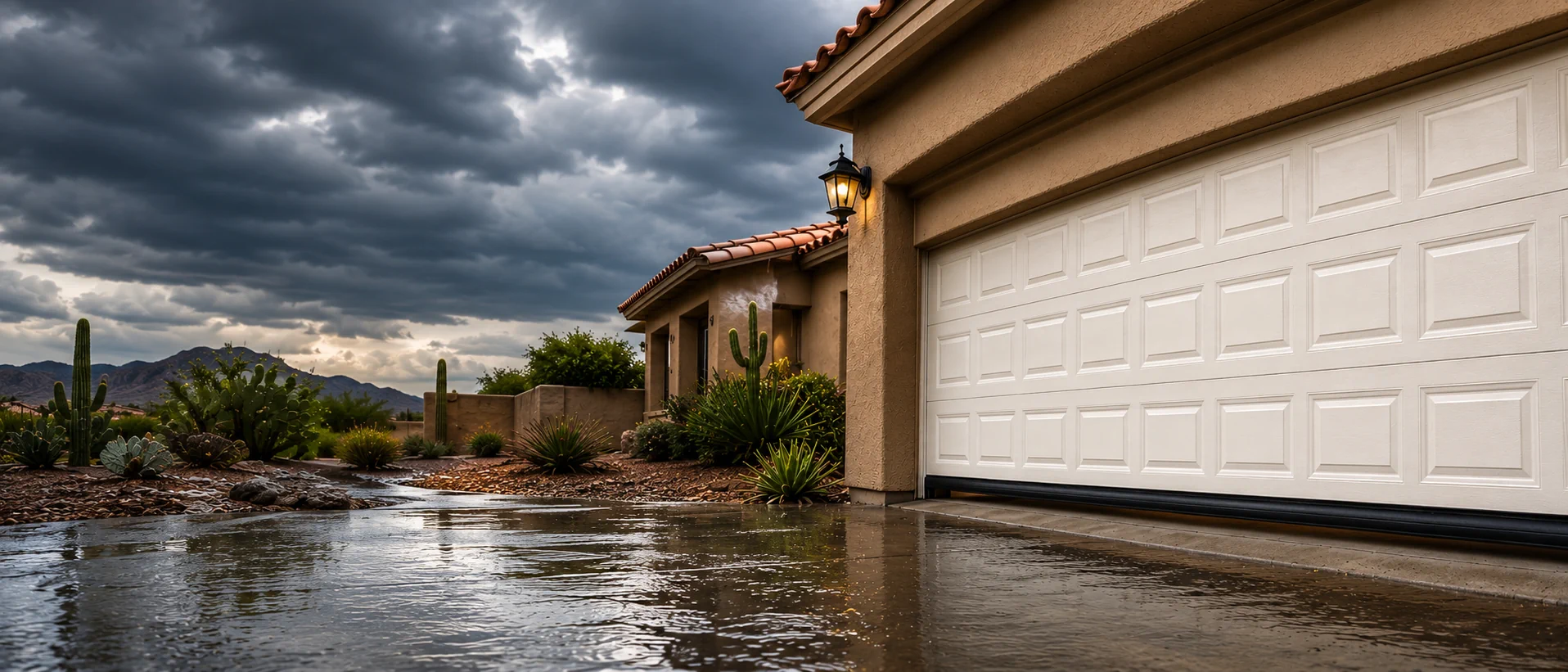
Help keep water, pests, and dust out of your garage with professional garage door weather stripping replacement from MasterCraft Garage Door Service LLC.
Small gaps around your garage door may not seem like a big deal at first, but in Arizona they can quickly lead to dust buildup, pest issues, water intrusion, and extra heat entering the garage.
Worn weather stripping can let dust, dirt, and debris blow into your garage through gaps around the door. If you are constantly sweeping near the garage door, the seal may no longer be doing its job.
Small openings around the garage door can give bugs, scorpions, mice, and other pests an easy way inside. Replacing worn seals helps close off those gaps before they become a bigger problem.
Weak bottom seals and damaged stop molding can allow rainwater to push into the garage during storms. Even a small gap can let in enough water to create a mess near the door.
Gaps around the garage door can allow hot outside air to move into the garage and nearby areas. A better seal helps reduce unwanted air movement and makes the garage feel more protected.
Why East Valley Homeowners Call Us First

When your door is broken, waiting isn’t an option. We prioritize same-day service for repair calls so your garage is secure and functional by end of day.

We’re a second-generation father-son operation, not a franchise or call center. Our name is on every job and our reputation depends on getting it right.

You get a clear price before we touch anything. No bait-and-switch diagnostics, no fees added after the fact. What we quote is what you pay.

Every repair is backed by a written warranty on parts and labor. High-cycle springs, quality hardware repairs that last, not a temporary fix that brings you back.

Every repair includes a complete inspection with photos. We check springs, cables, tracks, rollers, and opener, so you know the full condition of your system.

Real homeowners across Gilbert, Chandler, Queen Creek, Mesa, and Scottsdale. Our reputation is our best advertisement and we protect it on every single job.





Same-day service · Upfront pricing. · East Valley’s trusted installer since 2010
Garage door weather stripping refers to the full perimeter sealing system around your garage door. It helps close the gaps where the door meets the floor, sides, and top of the opening.
This system is usually made up of two main parts. The bottom seal is the rubber gasket attached to the bottom of the garage door that presses against the floor. The stop molding is the vinyl or PVC strip nailed to the door frame along the sides and top, creating a seal against the face of the door when it is closed.
Homeowners may also refer to garage door weather stripping as bottom seal, weather seal, door sweep, stop mold, or perimeter seal.
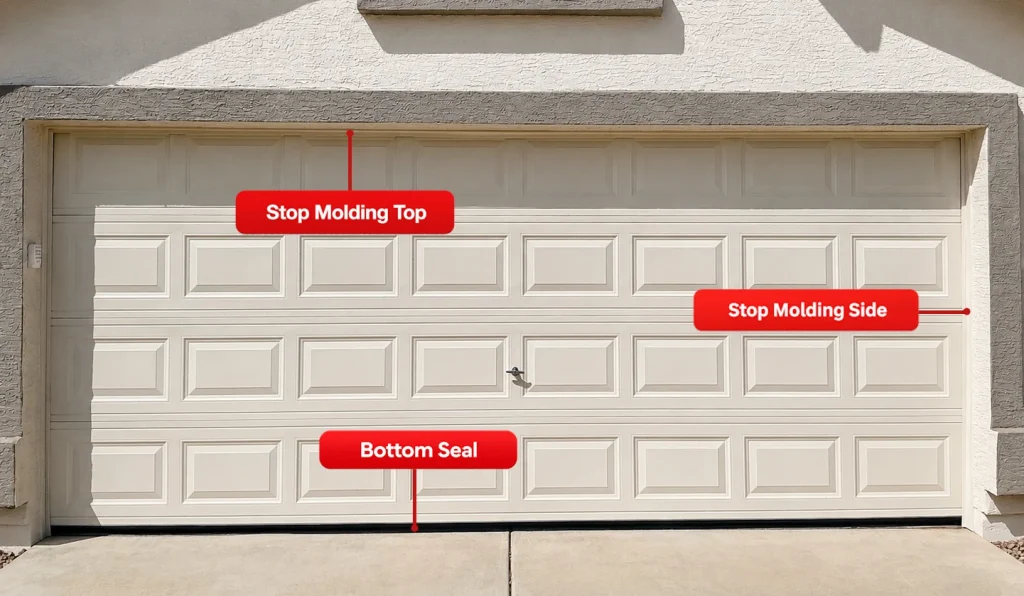
Worn garage door weather stripping is usually easy to spot once you know where to look.
If you notice any of these issues, replacing the worn weather stripping can help seal the garage door before the problem gets worse.
Garage door weather stripping wears out faster in Arizona because the Phoenix area’s intense UV exposure and extreme heat can break down rubber and vinyl faster than in milder climates.
Hot days followed by cooler nights can also cause the material to expand, contract, crack, and shrink over time. The bottom seal takes additional wear from pressing against the concrete floor every time the door opens and closes.
Door misalignment, uneven contact, or hard closes can also tear the seal or cause the stop molding to pull away from the frame.
Garage door weather stripping usually includes two separate parts, and each one seals a different area of the door. If you searched for “weather stripping,” the issue could be with the seal at the bottom of the door, the trim around the frame, or both.
The bottom seal attaches to the bottom edge of the garage door and compresses against the floor when the door closes. It is the main defense against water, pests, and gaps under the door.
The stop molding is nailed to the outside of the garage door frame along the sides and top. It seals the perimeter gap between the door and the frame, helping block side drafts, dust, dirt, and debris.
MasterCraft inspects both components and replaces whichever seal is failing, or the full weather stripping system if needed.
We check the bottom seal, side stop molding, and top stop molding to see where the garage door is no longer sealing properly. We also look for visible gaps, damaged material, and uneven contact.
We determine what type of bottom seal or stop molding your garage door needs. When replacing stop molding, we also match the color as closely as possible to the existing door frame.
The old bottom seal, damaged stop molding, or failed weather stripping is carefully removed. This allows the new material to sit properly and seal against the door or floor.
We install the new weather stripping and make sure it is properly seated, aligned, and secured. The goal is a clean fit that seals the garage door without interfering with normal operation.
Once the new seals are installed, we cycle the garage door and check the seal along the bottom, sides, and top. We verify that the door closes properly and that the weather stripping is making contact where it should.
MasterCraft carries and installs common garage door seal types to match the existing retainer, seal profile, door frame, and garage door configuration.
T-style bottom seal is the most common standard bottom seal for residential garage doors and slides into a compatible bottom retainer.
P-bulb bottom seal has a rounded bulb shape that compresses against the floor and is often used when a tighter seal is needed at the bottom of the door.
Beaded bottom seal fits into a J-channel style retainer and is typically used on doors designed for that specific bead-style profile.
Nail-on flat bottom seal fastens directly to the bottom of the door and is commonly used on older doors or wood garage doors without a standard retainer.
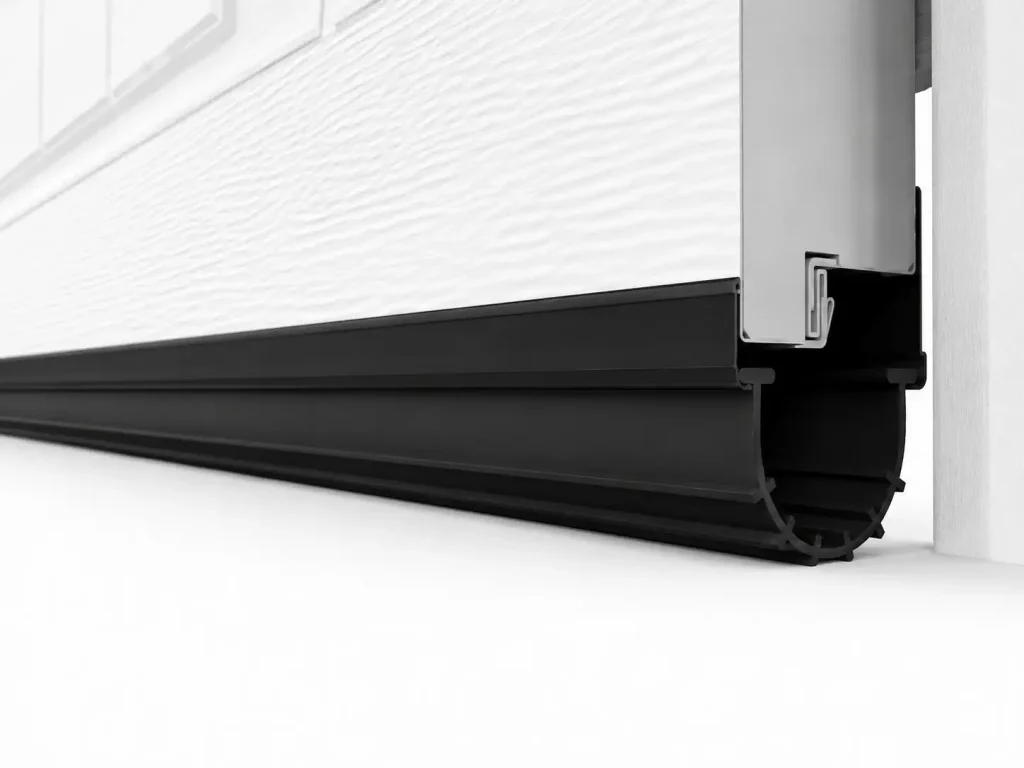
Standard PVC stop molding is installed along the outside frame of the garage door opening and seals against the face of the door on the sides and top.
Vinyl reverse angle jamb seal is used on certain door frame setups where a standard stop molding is not the best fit for the opening.
Top flap seal is installed across the top of the garage door opening and helps close the upper gap where the door meets the header.
Custom wood stop molding is primarily used to match custom wood overlay doors and solid wood garage doors where a standard PVC trim would not fit the look of the door.
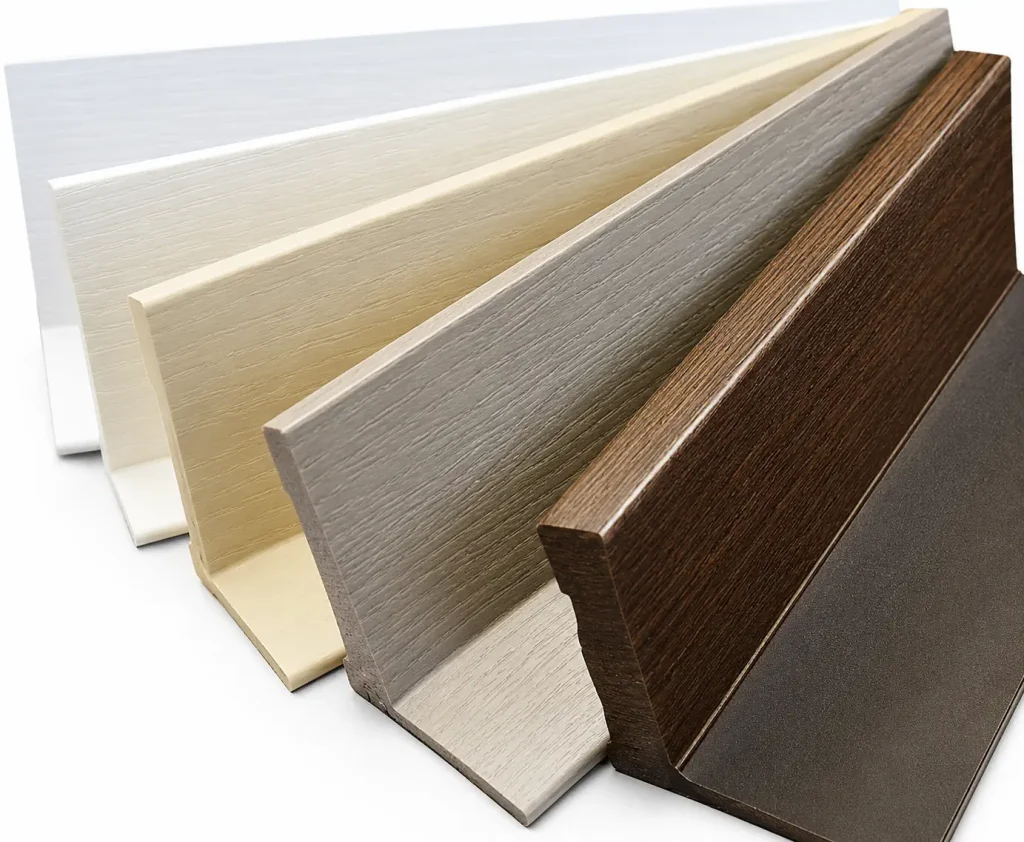
The bottom seal is one part of the garage door weather stripping system. It attaches to the bottom of the door and seals against the floor, while weather stripping can also include the stop molding along the sides and top of the door.
Common signs include daylight under or around the door, water getting into the garage, pests entering, dust blowing in, or rubber that is cracked, torn, flattened, or missing. If the seal no longer makes full contact, it may need to be replaced.
Most standard garage door weather stripping replacements can be completed during a normal service appointment. The exact time depends on whether we are replacing only the bottom seal, the stop molding, or the full perimeter seal.
Pricing depends on the type of seal, the size of the garage door, and whether the existing retainer accepts standard bottom seal.
Some homeowners can replace basic weather stripping themselves, but the correct seal profile and retainer type matter. If the wrong seal is installed, it may not stay in place or may not seal properly.
In Arizona, garage door bottom seals can wear out faster because of heat, UV exposure, dust, and daily contact with the concrete floor. The lifespan varies, but cracking, flattening, shrinking, or visible gaps are signs it is time to replace it.
Bad weather stripping can allow hot outside air to enter the garage, especially during Phoenix-area summers. If the garage is attached to the home, that extra heat can affect nearby rooms and make the space harder to keep comfortable.
We inspect both the bottom seal and the stop molding during the appointment. If only one part is failing, we can replace that component, but if the full perimeter seal is worn, replacing both may be the better option.
The correct bottom seal depends on the retainer attached to the bottom of your garage door. T-style bottom seal is the most common standard type, but some doors use P-bulb, beaded, J-channel, or nail-on flat seal.
New garage door seals can significantly reduce dust and debris from blowing into your garage by closing gaps under and around the door. They may not make the garage completely airtight, but a properly installed bottom seal and stop molding can make a noticeable difference.