

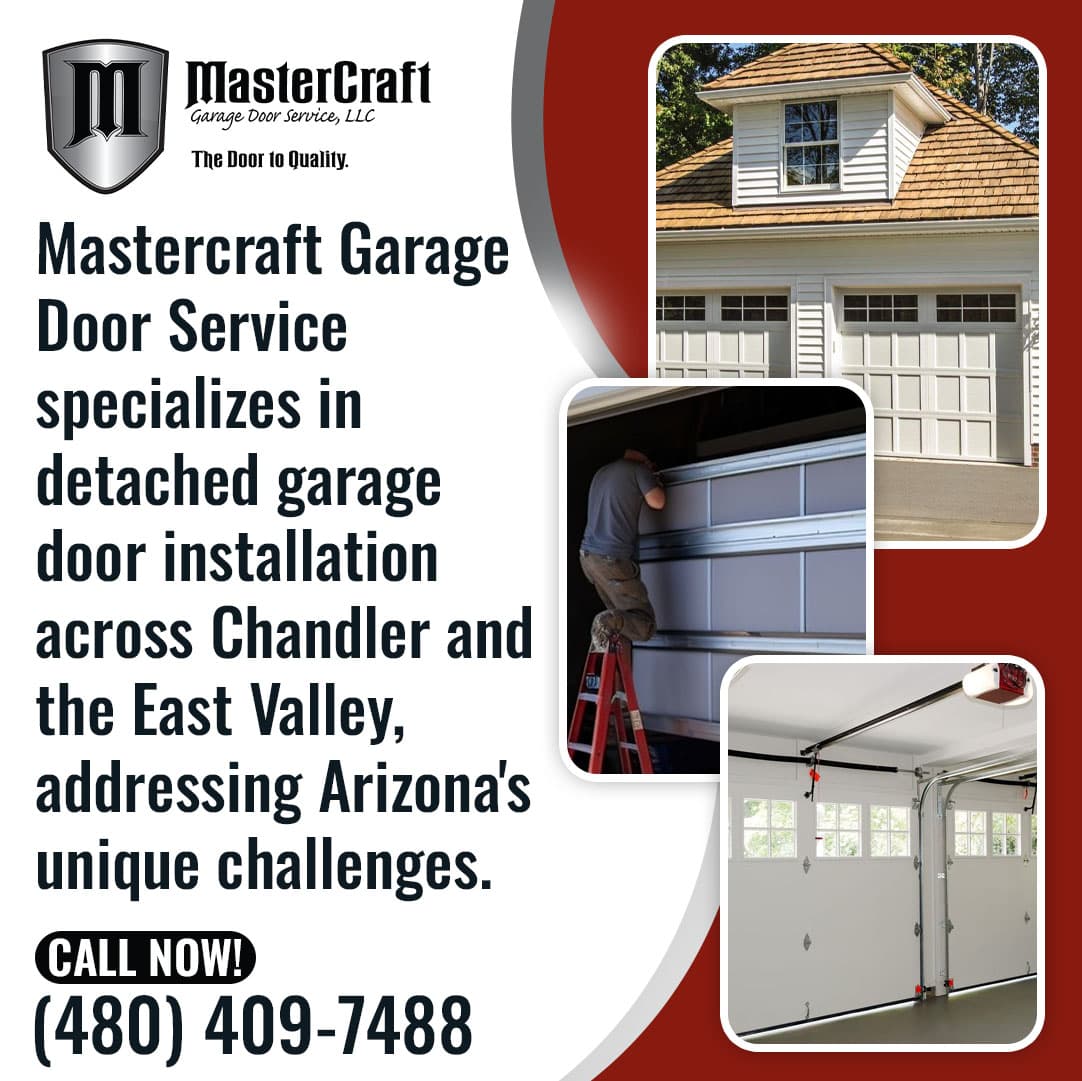
Detached garage door installation requires different considerations than attached garages. Your detached structure faces unique challenges, including power supply limitations, exposure to weather elements, and foundation requirements that affect door selection and installation methods. Arizona homeowners planning detached garage projects need to understand these factors before selecting garage door and installation services to avoid costly mistakes and delays.
At Mastercraft Garage Door Service LLC, we are a garage door company nearby in Chandler, AZ, and we help homeowners account for local heat, seasonal storms, and structural conditions when planning detached garage door installations.
Key Takeaways
- Detached garages need independent power sources for automatic door openers.
- Arizona’s extreme temperatures require insulated doors rated for heat resistance.
- Foundation settling affects detached garages more than attached structures.
- Proper sizing accounts for vehicle clearance and storage space needs.
- Professional garage doors installer services handle permit requirements and inspections.
Why Detached Garages Need Special Installation Considerations
Detached garages operate independently from your main home structure. This separation creates specific challenges that don’t exist with attached garages. Power supply, weather exposure, and structural movement all impact how your garage door functions over time.
Arizona’s climate intensifies these challenges. Summer temperatures exceeding 110 degrees stress garage door components, while winter temperature swings cause expansion and contraction. In 2024, Phoenix, Arizona, experienced temperatures of 110ºF or higher on 70 days, marking its hottest summer and hottest year on record, while also setting a new record with 113 consecutive days at or above 100ºF. This makes material selection critical for long-term performance.
Detached structures settle differently from homes. Your house foundation typically stabilizes within the first year, but detached garages built on separate foundations continue settling for 2 to 3 years. This movement affects door alignment, track positioning, and opener operation. Choosing garage door companies near you familiar with Chandler and Arizona soil conditions prevents installation problems.
Security concerns differ for detached garages. These structures sit farther from your main living areas, making them attractive targets for break-ins. Professional garage door installation includes security features like reinforced panels, quality locking mechanisms, and lighting systems that deter unauthorized access.
Electrical Requirements for Detached Garage Door Openers
Your detached garage needs dedicated electrical service for automatic door openers. Most modern openers require 120-volt circuits with ground fault protection. Running power from your main house involves trenching, conduit installation, and compliance with local electrical codes.
Arizona building codes specify minimum burial depths for electrical lines to prevent damage from landscaping equipment and protect wires from extreme surface temperatures. Some municipalities require deeper burial in areas with heavy equipment traffic.
Wireless opener systems offer alternatives to hardwired installations. Solar-powered openers work well in Arizona’s sunny climate, though battery backup systems need regular maintenance.
Electrical panel capacity matters for detached garage installations. Your main service panel must have available circuit space for the garage connection. Homes built before 1990 often need panel upgrades before adding detached garage power. Licensed garage door and installation professionals coordinate with electricians to handle these requirements.
Lighting circuits separate from opener circuits provide better functionality. Dedicated lighting allows you to illuminate your garage without activating the door opener, saving energy and extending the opener’s lifespan. Motion-sensor lighting adds security and convenience for evening access.
Choosing the Right Door Size for Your Detached Garage
Standard garage door sizes don’t always fit detached garage openings. Single-car doors typically measure 8 feet wide by 7 feet tall, while double-car doors span 16 feet wide by 7 feet tall. Custom sizing accommodates non-standard openings, oversized vehicles, or equipment storage needs.
Vehicle clearance determines the minimum door height. Standard passenger vehicles need 7-foot doors, but trucks, SUVs with roof racks, or lifted vehicles require 8-foot or taller openings. Measure your tallest vehicle, including any accessories or cargo carriers, before finalizing door specifications.
Width considerations extend beyond vehicle dimensions. You need 3 to 4 feet of clearance on each side of your vehicle for comfortable entry and exit. Storage cabinets, workbenches, or tool chests along garage walls reduce usable width, requiring wider door openings to maintain adequate space.
Header space above door openings affects installation options. Standard installations need 12 inches of clearance above the door opening for track and spring mounting. Low-headroom track systems work in spaces with only 6 to 8 inches of clearance, though these systems cost more and limit door style options.
Professional garage door installers measure openings accurately before ordering materials. Incorrect measurements lead to delays, additional costs, and installation complications. Experienced installers account for framing irregularities, foundation settling, and future adjustment needs when specifying door dimensions.
Insulation Needs for Arizona Detached Garages
Arizona’s extreme temperatures make insulation critical for detached garage doors. Uninsulated metal doors reach internal temperatures exceeding 120 degrees during the summer months, damaging stored items and making garage workspaces unbearable. Proper insulation reduces interior temperatures by 20 to 30 degrees.
R-value ratings measure insulation effectiveness. Residential garage doors range from R-0 (no insulation) to R-18 (maximum insulation). Arizona detached garages benefit from R-12 to R-16 rated doors, balancing performance with cost. Higher R-values provide better temperature control but increase door weight and installation complexity.
Insulation materials vary by door construction. Steel doors use polyurethane or polystyrene foam between panels. Polyurethane provides better insulation per inch of thickness but costs more than polystyrene. Wood composite doors include foam cores similar to steel doors, while solid wood doors offer natural insulation properties.
Weatherstripping complements door insulation. Quality weatherstripping seals gaps around door perimeters, blocking heat transfer and preventing dust infiltration. According to Department of Energy studies, proper weatherstripping can reduce energy costs in climate-controlled garage spaces. Arizona’s dusty conditions require durable weatherstripping materials that withstand UV exposure and temperature extremes.
Window placement affects thermal performance. Windows add natural light but reduce insulation effectiveness. Detached garages in Arizona benefit from windows on north-facing walls, minimizing direct sun exposure while maintaining visibility. Double-pane windows with low-E coatings provide better insulation than single-pane alternatives.
Foundation and Structural Considerations
Detached garage foundations must support door weight and operational stresses. Garage doors weighing 150 to 400 pounds create significant forces on opening mechanisms and supporting structures. Foundation settling or movement causes misalignment, binding, and premature wear on door components.
Arizona’s soil can make garage foundations unstable, especially in Chandler and Phoenix. Clay soil swells when wet and shrinks when dry, making detached garages more likely to shift since they weigh less than houses. A good foundation needs moisture barriers and tightly packed base layers.
The beam above your garage door (header) must be strong enough for the door’s weight and hardware. If it’s too small, it can sag and cause the door to work poorly. Building codes set minimum sizes depending on the door’s width and wall type.
Garage door tracks are attached to the wall next to the door opening. These areas need to be reinforced to handle the weight and spring tension. Professional installers make sure all attachment points are strong enough.
The slope of your garage floor affects how well the door seals. The floor should slope gently toward the door for drainage, but too much slope can stop the door from sealing. In Arizona, just a slight slope is enough since heavy rain is rare, but drainage still matters.
Material Selection for Arizona Climate
Steel doors dominate Arizona residential garage door installations. Steel withstands high temperatures, resists warping, and requires minimal maintenance compared to wood alternatives. Galvanized steel with powder-coat finishes provides the best corrosion resistance in Arizona’s dry climate, though rust can occur around fasteners and damaged finish areas.
Aluminum doors offer lightweight alternatives for large openings. Aluminum resists corrosion better than steel and doesn’t rust, making it ideal for detached garages near swimming pools or landscape irrigation systems. The material’s lower weight reduces strain on opener motors and spring systems, extending component lifespan.
Wood composite doors provide aesthetic appeal without solid wood maintenance requirements. These doors feature wood grain finishes over steel or fiberglass cores, combining durability with traditional appearance. UV-resistant finishes prevent fading in Arizona’s intense sunlight, maintaining appearance longer than untreated wood products.
Fiberglass doors suit coastal Arizona locations near rivers or water features. The material resists moisture damage, won’t rust, and maintains its appearance in humid conditions. Fiberglass doors cost more than steel alternatives but require less maintenance over 15 to 20 year lifespans.
Color selection affects door temperature and longevity. Light colors reflect heat better than dark colors, reducing surface temperatures by 15 to 20 degrees. White, almond, and light gray doors maintain cooler surface temperatures, extending finish life and reducing thermal stress on door components. Garage door companies near you stock colors suited to Arizona conditions.
Permit Requirements for Detached Garage Door Installation
Arizona municipalities require building permits for detached garage construction and door installations. Permit processes verify structural safety, electrical compliance, and zoning conformance. Failing to obtain proper permits results in fines, required removal of unpermitted work, and complications when selling your property.
Permit applications need detailed plans showing door dimensions, structural support, and electrical service. Licensed contractors typically handle permit applications as part of installation services, though owner-builders can apply directly. Application fees vary by municipality, ranging from basic plan review charges to percentage-based fees tied to project valuation.
Inspection requirements include multiple stages. Initial inspections verify foundation and framing before door installation. Electrical inspections confirm proper wiring and grounding. Final inspections assess completed installations, checking door operation, safety features, and code compliance. A professional garage door company near you can coordinate inspections, preventing delays.
Homeowner association approvals may precede building permits. Many Arizona communities require architectural committee approval for detached structures, including door style, color, and size specifications. HOA review processes add 2 to 4 weeks to project timelines, making early application submission important for avoiding construction delays.
Setback requirements limit detached garage placement. Most municipalities require minimum distances from property lines, typically 5 to 10 feet from side and rear boundaries. These setbacks affect garage orientation and door placement, influencing vehicle access patterns and turnaround space availability.
Detached Garage Door Quick Reference Guide
| Door Size | Best For | Price Range | Installation Time | Insulation Level | Best Material |
| Single-Car (8×7 ft) | One vehicle, motorcycles, small equipment | $800–$1,500 | 4–6 hours | R-12 to R-16 | Steel |
| Double-Car (16×7 ft) | Two vehicles, workshop space | $1,200–$2,500 | 6–8 hours | R-12 to R-16 | Steel |
| Tall Door (8×8 ft or 16×8 ft) | Trucks, SUVs, roof racks | $1,000–$2,800 | 5–8 hours | R-12 to R-16 | Steel or aluminum |
| Custom Size (18+ ft wide) | RVs, boats, multiple vehicles | $2,500–$5,000+ | 8–12 hours | R-12 to R-16 | Steel |
Maintenance Considerations for Detached Garage Doors
Detached garage doors require more frequent maintenance than attached garage doors. Greater exposure to weather elements accelerates wear on moving parts, weatherstripping, and finish materials. Arizona’s extreme heat, dust, and occasional monsoon storms create harsh operating conditions requiring proactive maintenance approaches.
Lubrication schedules differ for Arizona installations. Standard recommendations suggest lubricating moving parts every 6 months, but Arizona conditions warrant quarterly lubrication. High temperatures evaporate lubricants faster, while dust and dirt contaminate roller bearings and hinge points. Silicone-based lubricants withstand heat better than petroleum products.
Garage door springs get looser as it gets hotter and tighter as it gets colder. In Arizona, big temperature swings each day can affect how your door works. Professionals adjust the springs a few times a year to keep the door balanced.
Garage door tracks can get misaligned, especially in detached garages that shift over time. It’s important to check the tracks every month to catch problems early. The horizontal tracks should be level, and the vertical tracks should be straight up and down.
Weatherstripping on garage doors wears out faster in Arizona because of the sun and heat. It usually needs to be replaced every 3 to 5 years. Old weatherstripping lets in dust and makes insulation less effective, so replace it as soon as it’s damaged.

Get Professional Garage Door Installation Services
Planning a detached garage project requires experienced installation professionals. Mastercraft Garage Door Service LLC provides complete garage door installation services throughout the East Valley of Phoenix, including Chandler, Gilbert, Queen Creek, and nearby areas. Our licensed technicians handle permits, electrical coordination, and quality installations designed for Arizona’s demanding climate.Call Mastercraft Garage Door Service LLC at (480) 264-0648 or email service@mc-doors.com to schedule your detached garage door consultation. We assess your project requirements, recommend appropriate door styles and materials, and provide detailed installation proposals. Our 100% satisfaction guarantee covers all work, and we maintain partnerships with leading manufacturers to offer extensive product selections. When you need a reliable garage doors installer, trust the team with over 10 years of experience serving Arizona homeowners.