

Your garage door opener works hard every day. In Gilbert, AZ, it also works in one of the harshest climates in the country. Summer temperatures may exceed 110°F, and that heat quietly wears down motors, circuit boards, and drive systems over time.
Catching early warning signs of opener failure can save you from a broken door, a stuck car, and a costly emergency repair call.
Our team at Mastercraft Garage Door Service has served Gilbert and the East Valley since 2010. This guide covers the nine most common signs that your garage door opener is about to fail, and what to do about each one.
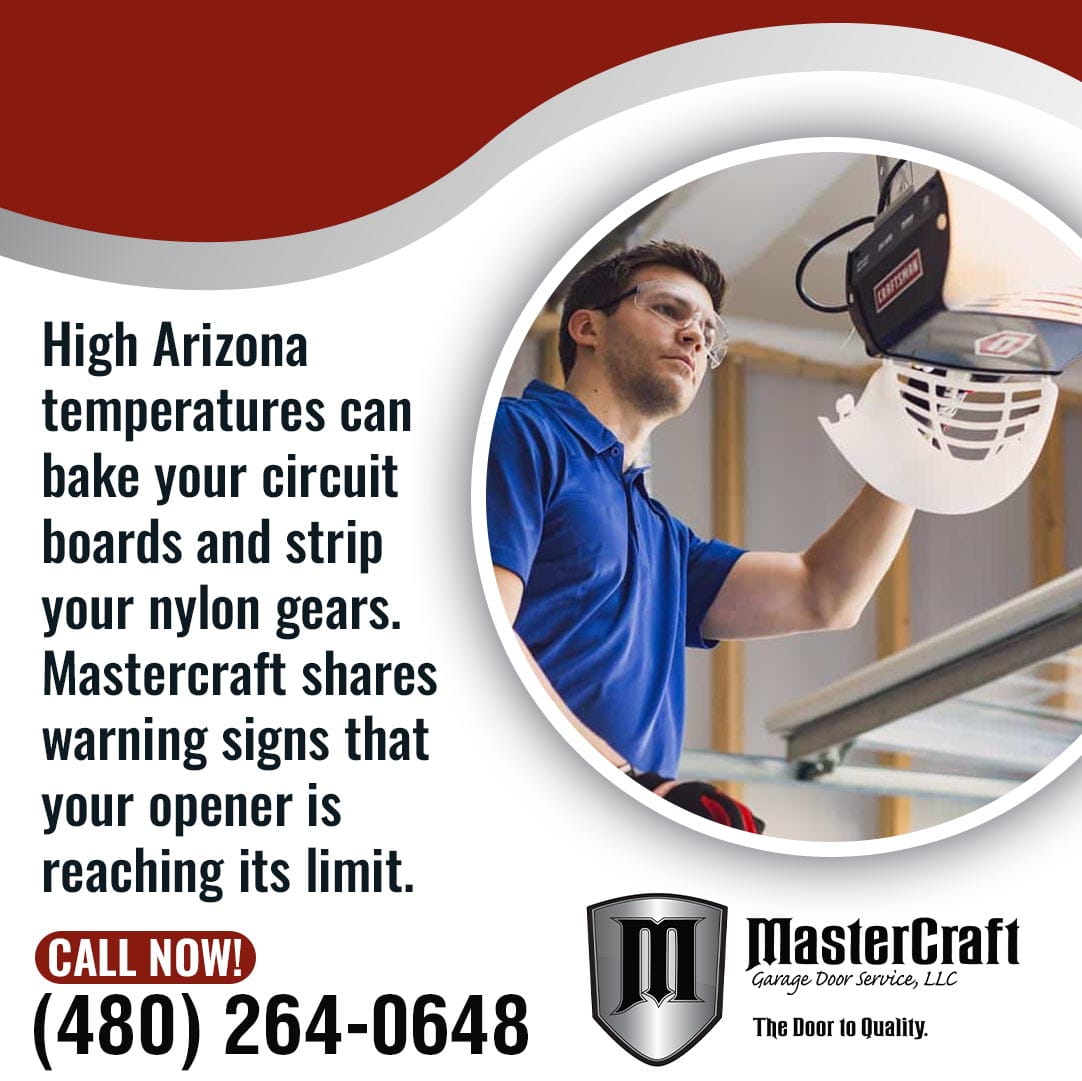
Key Takeaways
- Slow response, grinding noises, and inconsistent movement are early signs that garage door opener repair may be needed.
- Most openers last 10 to 15 years. Older units in Arizona may need replacement sooner due to heat exposure.
- A LiftMaster garage door opener is a proven option for hot climates due to its thermal protection features.
- Do not wait for a full failure. Garage door opener repair is faster and cheaper when addressed early.
- When replacement is the better option, professional garage door opener installation protects your investment and keeps your door running safely for years.
How Arizona Heat Damages Garage Door Openers
Heat above 100°F affects every part of a garage door opener, from the motor to the logic board to the drive belt or chain.
An attached garage in Gilbert can reach 130°F to 150°F in summer when not air-conditioned. According to Energy Star, heating and cooling account for 50 to 70% of energy used in the average American home. An uninsulated attached garage directly contributes to higher cooling costs in summer.
High heat degrades plastic gears, stresses electrical components, and dries out lubrication inside the motor housing. Most manufacturers design openers for operating temperatures up to around 120°F. In an uninsulated Arizona garage, that limit may get crossed.
Warning Sign #1: The Opener Responds Slowly
If there is a noticeable delay between pressing the remote and the door moving, the motor or circuit board may be struggling.
A healthy opener responds within one to two seconds. A delay of three or more seconds points to a motor that is overheating or a logic board losing function. This is often one of the first signs Gilbert homeowners notice before a full failure.
Warning Sign #2: The Door Reverses Without Being Told To
When a garage door starts to close and then reverses on its own, the opener’s limit settings or sensors may be drifting due to heat damage.
Limit switches tell the opener when the door has fully opened or closed. Heat warps the plastic housing around these switches over time. The result is a door that thinks it has hit an obstruction when it has not.
Warning Sign #3: The Motor Runs But the Door Does Not Move
If you hear the motor running but the door stays still, the drive gear inside the opener has likely stripped.
Drive gears are made of nylon in most openers. Nylon softens in extreme heat, making the teeth on the gear wear down faster in Arizona than in cooler climates. This is a common repair call in Gilbert during July and August.
A garage door opener repair technician can replace the gear set without replacing the full unit if caught early.
Warning Sign #4: Grinding or Straining Noises
Loud grinding, humming, or straining sounds during operation point to worn gears, a dry drive chain or belt, or a motor drawing too much power.
Compare the noise level now to when the opener was new. A chain drive opener will always be louder than a belt drive model, but any new or worsening noise is worth investigating. Ignoring grinding sounds often leads to a full motor failure within weeks in high-heat conditions.
Warning Sign #5: The Wall Button Works But the Remote Does Not
When the wall button opens the door, but the remote control does not, the issue is usually the remote, the antenna, or the receiver board.
Heat degrades the receiver circuit inside the opener over time. If new batteries do not fix the remote issue, the antenna wire may have melted or disconnected. In some cases, the receiver board itself needs replacement. A garage door opener installer can diagnose this in a single visit.
Warning Sign #6: The Opener Activates on Its Own
A garage door opener that activates without any input can indicate a failing circuit board, frequency interference, or a stuck remote button.
This issue is more common in older units. Circuit boards in openers older than 10 years become unreliable in extreme heat. If your door opens or closes on its own, especially at night, have the opener inspected before it becomes a security risk.
Warning Sign #7: The Door Moves Unevenly or Jerks
Jerky, uneven movement points to a drive system problem, worn rollers, or a motor struggling to maintain consistent power output.
This is different from a balance issue (which is a spring problem). If the door moves in fits and starts during the full opening cycle, the opener is likely failing. Heat causes belt and chain drives to stretch and slip, which creates the jerking motion homeowners report.
Warning Sign #8: The Opener Trips the Safety Reverse Too Often
Frequent, unwarranted safety reversals mean the opener’s force settings have drifted, or the motor is underpowered for the current load.
As motors wear, they generate less torque. When a door is heavier than the motor can handle smoothly, the opener interprets resistance as an obstruction and reverses. In Arizona, dried-out rollers and a struggling motor create this problem regularly during the summer months.
Warning Sign #9: The Unit Is More Than 10 Years Old
Garage door openers have an average lifespan of 10 to 15 years under normal conditions. In Arizona’s heat, that window can be shorter.
According to industry experts, most garage door openers last between 10 and 15 years with proper maintenance. Units installed in high-heat environments like Gilbert that have not been serviced may show failure signs before the 10-year mark.
If your opener is approaching or past 10 years old and showing any of the signs above, a proactive replacement is worth considering.
Garage Door Opener Warning Signs: Quick Reference Table
| Warning Sign | Likely Cause | DIY Fix? | Call a Pro? |
| Slow response | Overheating motor or logic board | No | Yes |
| Door reverses on its own | Drifted limit switches or sensors | Try sensor cleaning | Yes if it continues |
| Motor runs, door stays still | Stripped nylon drive gear | No | Yes |
| Grinding or straining noises | Worn gears or dry drive system | Lubricate chain/belt | Yes if noise continues |
| Remote stops working | Dead battery, antenna, or receiver | Replace battery first | Yes if battery fails |
| Door activates on its own | Failing circuit board or interference | Check remote buttons | Yes |
| Jerky, uneven movement | Stretched belt/chain or worn rollers | No | Yes |
| Frequent safety reversals | Low motor torque or drifted force settings | No | Yes |
| Unit over 10 years old | General age-related wear | Inspect annually | Yes for assessment |
What Type of Opener Holds Up Best in Arizona?
A belt drive opener with a DC motor and thermal protection holds up better in Arizona heat than older chain drive units.
Belt drives run quieter and generate less internal friction than chains, which means less heat buildup inside the motor housing. A LiftMaster garage door opener is a common choice for East Valley homeowners. LiftMaster builds units with thermal overload protection that shuts the motor down before it burns out, a valuable feature during Gilbert’s summer months.
When it is time to install garage door opener hardware in a hot climate, look for these features:
- DC motor: runs cooler and more efficiently than AC motors
- Battery backup: keeps the door working during power outages from summer storms
- Thermal overload protection: shuts down before heat causes permanent damage
- myQ or smart connectivity: lets you monitor and control the door remotely
Mastercraft’s garage door opener installers can walk you through the right model for your garage setup and budget.
When to Repair vs. When to Replace
Repair your opener if it is under 8 years old and the issue is a single component. Replace it if the unit is over 10 years old, repairs are recurring, or it lacks modern safety features.
Garage door opener repair in Gilbert, AZ typically costs between $100 and $200 for common issues like gear replacement or sensor alignment. A full garage door opener installation runs between $200 and $500, depending on the model and drive type.
If you have paid for two or more repairs in the past two years, a new unit is likely the more cost-effective choice.
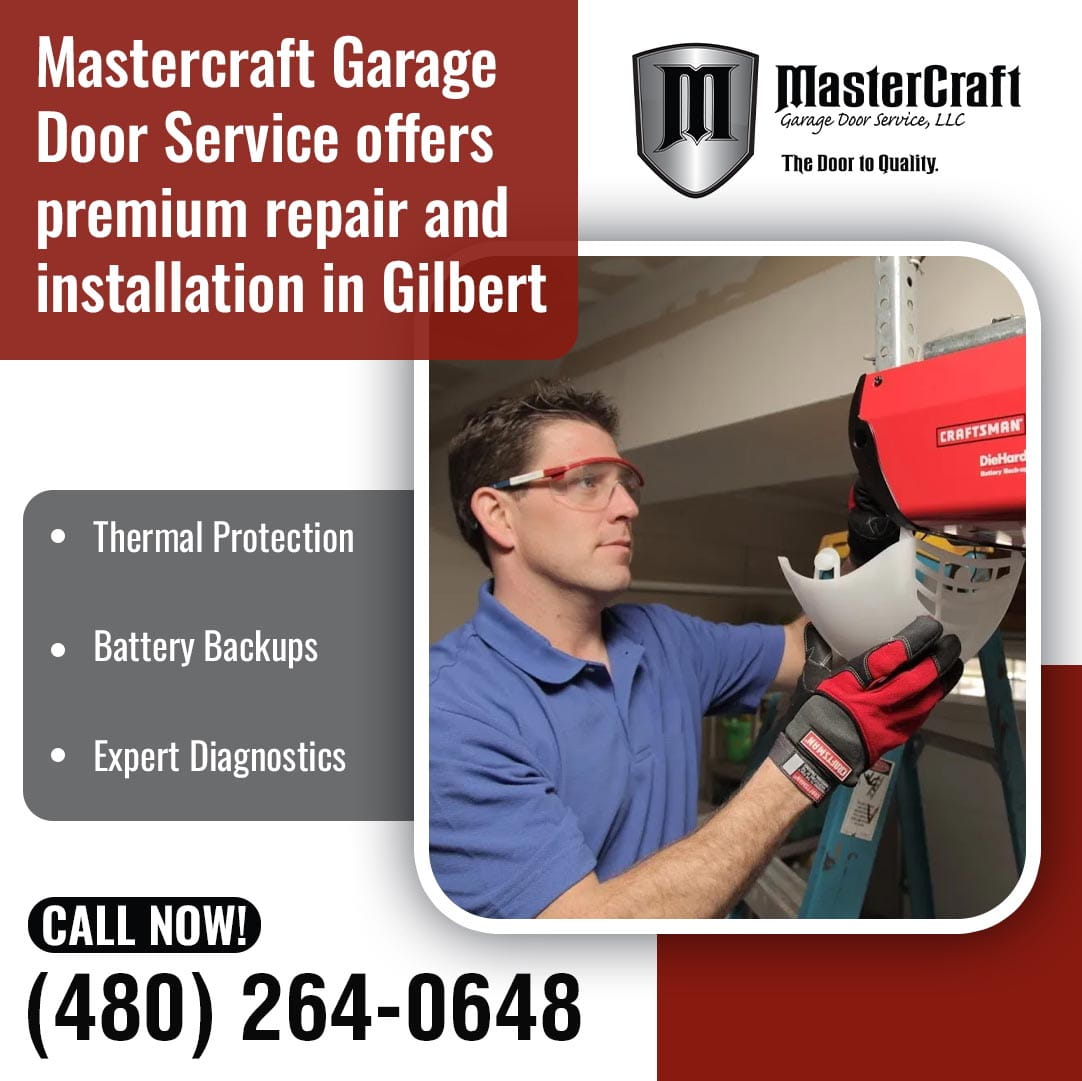
Get Your Opener Inspected Before Summer
Gilbert summers are not forgiving on aging equipment. If your opener is showing one or more of the signs above, scheduling an inspection now, before temperatures climb past 110°F, gives you time to make repairs without being rushed.
We provide free estimates on garage door opener repair and garage door opener installation across Gilbert and nearby areas. Our team is licensed, insured, and has been serving East Valley homeowners since 2010.
Call Mastercraft Garage Door Service LLC today to schedule your opener inspection at (480) 264-0648 or email us at stuartjr@mc-doors.com.
Serving Gilbert, Chandler, Mesa, Scottsdale, Tempe, Queen Creek, Ahwatukee, Fountain Hills, Gold Canyon, Apache Junction, and nearby areas.